How much does an infrared sauna cost to run?
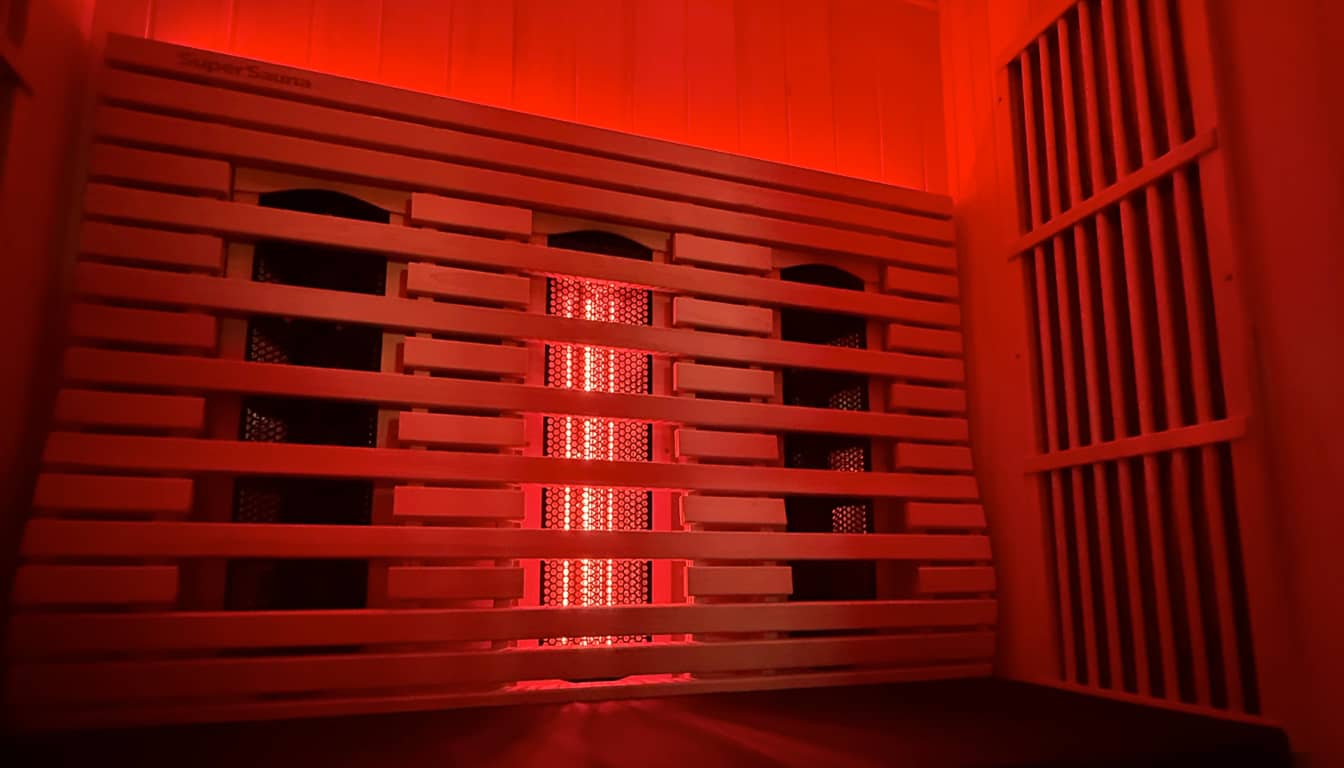
For many people, an infrared sauna at home is the perfect way to relax and improve their health at the same time. But a frequently asked question is: how much electricity does an infrared sauna use, and what does it actually cost? We'll explain step by step what the energy consumption is, which factors influence the cost, and how you can gain insight into the electricity costs of an infrared sauna.
In short: energy consumption and costs of an infrared sauna
- An infrared sauna heats the body directly via radiators, not the air, which keeps energy consumption low.
- The warm-up time is short (a few minutes), which prevents unnecessary electricity consumption.
- An average session in an infrared sauna costs only 30 cents.
- An infrared sauna operates on a standard 230-volt outlet (so no high-voltage power is required).
- For two sessions per week, this amounts to approximately €35 per year.
- An infrared sauna is two to three times more efficient than a traditional sauna (3.6 - 9 kW per hour).
- Much cheaper in electricity consumption than a traditional Finnish sauna.
Infrared Sauna Power Consumption
The infrared sauna's power consumption depends entirely on the built-in heaters. These heaters convert electricity into infrared heat that warms your body directly. This is a major difference from a traditional sauna, where the air in the entire cabin is heated.
Because an infrared sauna heats more efficiently, its energy consumption is relatively low. The warm-up time is often only a few minutes, so you don't use unnecessary energy.
How much does an infrared sauna cost to power?
The power consumption of an infrared sauna depends on the number of heaters and the total wattage. Suppose you have a cabin with 8 heaters and a total power of 2,400 watts (2.4 kW).
- A 30-minute session will then consume 1.2 kWh (half of 2.4 kW).
- At an average electricity price of €0.28 per kWh, this costs only €0.34 per session.
If you use the sauna twice a week for half an hour, you pay:
- €0.34 x 2 = €0.68 per week
- Per year (52 weeks), this amounts to only €35.36 per year
If you have a dual-rate meter, this amount can be even lower during off-peak hours.
Let's look at some examples:
- Small infrared sauna: (1-2 people)
Power: approx. 1,600 watts (1.6 kW)
Cost per 30 minutes: €0.22 - Medium-sized infrared sauna: (2-3 people)
Power: approx. 2,500 watts (2.5 kWh)
Cost per 30 minutes: €0.35 - Large infrared sauna: (3-4 people)
Power: approx. 3,600 watts (3.6 kWh)
Cost per 30 minutes: €0.50
As you can see, the electricity costs of an infrared sauna are surprisingly low. For less than one euro per session, you can enjoy the benefits of a professional sauna experience at home.
What factors influence the energy consumption of an infrared sauna?
The energy consumption of an infrared sauna is not the same for everyone. These factors determine your final cost:
- Type of heater - Full-spectrum heaters often have more power than magnesium oxide or carbon heaters.
- Number of people - The larger the cabin, the more heaters and therefore the higher the energy consumption.
- Session duration - On average, people spend 30 to 45 minutes in the infrared sauna.
- Energy rate - The price per kWh naturally varies by energy supplier and contract.
How much electricity does an infrared sauna use per month?
This naturally depends on how often you use the infrared sauna and the price per kWh. But do you, for example, use a 2-person sauna (1.6 kWh) 3 times a week for 45 minutes?
- 0.75 hours x 1.6 kWh = 1.2 kWh per session
- 1.2 kWh x €0.22 = €0.26 per session
- 12 sessions per month = €3.12 per month
Even if you have a larger sauna, the monthly electricity costs of an infrared sauna remain low compared to other wellness options.
How much electricity does an infrared sauna use compared to a traditional sauna?
A traditional Finnish sauna often uses 3.6 to 9 kWh per hour, which equates to €1.32 to €1.98 per session. An infrared sauna is therefore two to three times more energy-efficient and heats up faster, so you can use it sooner. An infrared sauna not only offers health benefits but is also relatively energy-efficient. On average, the electricity costs of an infrared sauna range from €0.35 to €0.70 per hour, depending on the model and usage. This makes it an affordable way to regularly enjoy the therapeutic warmth of an infrared sauna.
Using a Supersauna® infrared sauna
First, let the infrared sauna warm up (this only takes 5 to 10 minutes). Using the infrared sauna often consists of one session of approximately 15 to 30 minutes.
- Shower and dry.
- Sauna session: 15 to 30 minutes.
- Warm after showering.
As you can see, in 30 to 60 minutes, you'll be completely relaxed and ready to start the day with a good dose of enlightenment.
Connecting the infrared sauna to a standard outlet (230 volts)
Almost all traditional Finnish saunas require a high-voltage power supply, which can require anywhere from 6 kW per hour to as much as 18 kW per hour. This means you'll need to install a high-voltage power supply and have an electrician install the sauna heater. This means your running costs and installation costs are much higher. Supersauna.nl infrared cabins don't require a high-voltage power supply; they require between 1100 and 2900 watts, so you can connect them to any 220V outlet. Simply plug it in and enjoy! It's as simple as it sounds! Once you've assembled the cabin, it's simply a matter of plugging it in.
Infrared saunas are compact and therefore easy to place anywhere in your home.
As you've probably already seen on our website, traditional saunas are generally much larger than infrared cabins. This is because a proper sauna session in a traditional sauna requires you to lie on a bench. The big advantage of an infrared cabin is that this isn't necessary! For maximum depth of action, you should sit directly in front of the heaters so that the infrared radiation reaches your muscles and joints directly. This means that a two-person infrared cabin is available from just 110cm * 100cm * 190cm! This allows SuperSauna infrared cabins to be small and compact, making them much easier to install than a traditional Finnish sauna. Furthermore, almost all infrared saunas are locally sourced, meaning you can even install them in a room with carpeting, for example. Whether you choose a compact cabin or a more spacious version, the positive effects of an infrared sauna contribute to your overall health. Thanks to the easy installation via a standard electrical outlet, you can quickly enjoy the pleasant warmth and therapeutic benefits.
Easy and quick assembly of the infrared sauna
Most Finnish saunas are kits that take an average of 6 to 12 hours to assemble. They initially consist of individual slats that you slide together and screw into place, and otherwise, they are panels that you screw together—a lot of work! You'll be using a traditional Finnish sauna with a three-phase heater, which you'll need to have installed by an electrician. This isn't the case with SuperSauna infrared cabins! Thanks to a very easy click system, you can assemble this cabin in 40 to 60 minutes. Simply remove all the panels from the packaging and click them together with ease.
Personal advice
Have questions about our saunas? Our experts are happy to help you personally via WhatsApp. With more than twenty years of experience, we help you discover whether an infrared or traditional sauna is the best fit, perfectly tailored to your home, comfort and wellbeing.
Send us a message and we'll get back to you as soon as possible.
Contact us:
 via
via About SuperSauna
With over twenty years of expertise, SuperSauna is the market leader in the Netherlands and Belgium, and a trusted name across Germany and Poland. Our knowlegde and innovation ensure you will always find the perfect sauna for your needs.